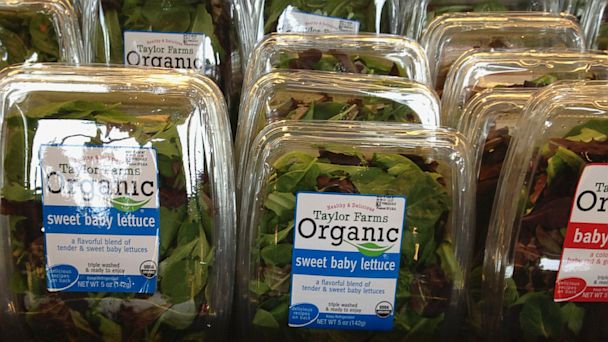
Well, "it's been a long time comin" (
as Crosby, Stills, and Nash sang in 1969), but the FDA's
Food Safety Modernization Act (FSMA) is nearing actualization. Work began on the act in early 2009, after years of serious outbreaks of food-borne illness that hospitalized many people and even killed some (you probably remember the food recalls then and even more recently). The basic idea was to craft guidelines for food safety to work proactively to
prevent such debacles, rather than only to
react after the fact, the FDA's previous
modus operandi.
The FSMA finally was passed by Congress in 2010 as food-caused illnesses increased, but it took two more years to work out the details, coordinating the desires of multiple participants through various governmental groups.
As Margaret Hamburg, FDA Commissioner remarked, "The FDA knows that food safety, from farm to fork, requires partnership with industry, consumers, local, state and tribal governments, and our international trading partners." The new rules reflect that cooperation, as well as input from farmers' groups like
our own Pennsylvania Association for Sustainable Agriculture, who have worked with the FDA since 2009 (PASA). (There are other rules coming, too, that will regulate the safety of imported foods.)
The FSMA addresses two different aspects of food production. The first, aimed at food-processing companies, does not affect Red Hill Farm directly:
Current Good Manufacturing Practice and Hazard Analysis and Risk-Based Preventive Controls for Human Food (boring but necessary for helping ensure our safety, with thanks to PASA for providing the link). The other aspect of food production concerns the farm directly, the
Standards for the Growing, Harvesting, Packing, and Holding of Produce for Human Consumption (that's the complete document, again thanks to PASA).
Fortunately, the
FDA has provided a shorter summary of the new rules and regs that will affect the farm (see here). As the
New York Times notes, this second component of FSMA addresses "the four Ws" of life on a produce farm like ours:
water,
waste,
workers, and
wildlife. These are the elements of farm life that, if handled incorrectly, can spread food-borne problems,
the most common being the bacteria E. coli, Salmonella, and Shigella; the virus Hepatitis A; and the parasite Cyclospora.
Regarding
water, the new rules require farms to test their water source at the start of each growing season, though distinctions are drawn between water used for irrigation, which only affects plants through their roots, and water used for washing produce, which obviously must be purer. Equipment for delivery or use of the water must also be inspected to identify potential problems. Rules are more stringent for produce likely to be eaten raw (e.g., lettuce) than for produce like potatoes, artichokes, or corn, which are cooked.
"
Waste" refers to two aspects of farm practice, both of which we've got covered. One is making sure workers have a lavatory and hand-washing facility available, as opposed to none, which leads to, you know... (fill in the blank); sadly the lack of sanitary facilities is common for field workers on large industrial farms. The other "
waste" concern is assuring that compost which includes manure is sufficiently aged and dried before it is applied as fertilizer. (We don't use fresh manure; we purchase our well-aged compost from the
Vermont Compost Company.)
Regarding
workers, the rules seem like no-brainers to farmers like us. Workers must wash their hands after handling unwashed produce and before washing produce or handling already-washed produce (duh!). Washed produce must be kept separate from yet-unwashed food. Produce must be stored at safe temperatures (thank goodness for our wonderful refrigeration system!).
Finally, concerning domestic animals and
wildlife, the rules also seem obvious; many farms already follow them, though they haven't been required to until now: "
the rule proposes farms...take reasonable measures to prevent pathogens from being introduced onto the produce [by animals] and not harvest produce that is visibly contaminated...." Wow, what a concept (!!).
As to compliance with these rules, small farms like ours, while not totally exempted (would we really want to be?), are cut some slack in terms of time to reach compliance. "Very Small Businesses" (average monetary value of food sold annually to be no more than $250,000 and sales made only to individuals or retailers no more than 275 miles from the farm) have up to six years to comply with water regulations and up to four years for the others. Obviously we won't need that.
Meanwhile,
PASA will be offering a workshop at their
annual conference at Penn State on Saturday February 9th (the conference runs from the 6th to the 9th, and anyone can sign up to go; you don't have to be a farmer!--
see here). Further, Peggy Fogarty-Harnish, of the Penn State Extension Service in Lancaster, PA, is offering workshops to help farms understand the new rules about Good Agricultural Practices (GAP). (I know this through an email I received from PASAEastern, so I'm sorry I don't have a link to the information.) All in all, I think we're in great shape!
If you'd like to comment to the FDA,
here's the site; just search for Food Safety Modernization Act.